Introduction: The MVP Trap
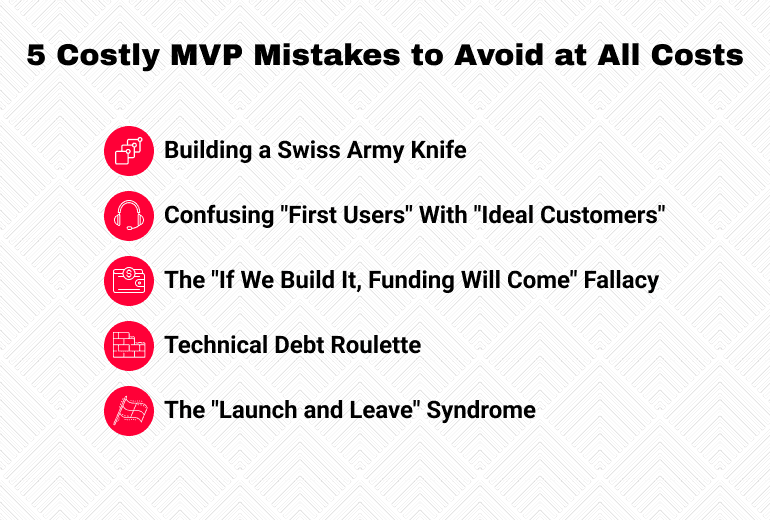
This scenario plays out daily in the SaaS world. At Dadword IT, we've helped dozens of startups recover from MVP disasters. The difference between success and failure often comes down to avoiding these 5 fatal mistakes:
Mistake #1: Building a Swiss Army Knife (Instead of a Scalpel)
The Problem: Many founders cram every possible feature into their MVP, believing more functionality equals higher value. In reality:
- 70% of MVP features are rarely or never used (Pendo)
- Each unnecessary feature adds 15-30% to development time
Real Example: A client came to us after building an all-in-one marketing platform. Users only engaged with the email automation tool – the other 8 features were ignored.
The Fix:
- Use the "One Job" Framework: What single problem does your MVP solve?
- Apply Kano Model analysis to categorize features as: -- Basic expectations -- Performance boosters -- Delighters
"We help clients identify the 3-5 must-have features that actually move the needle."
Mistake #2: Confusing "First Users" With "Ideal Customers"
The Problem:
Startups often collect feedback from:
- Friends/family (too nice)
- Random Reddit users (wrong audience)
- Free-tier users (won't pay anyway)
The Fix:
Pre-validation tactics:
- Sell before you build (use mockups + Stripe test mode)
- Run targeted LinkedIn ads to gauge interest
- Offer 1:1 onboarding for early adopters
"Our client onboarding includes customer persona templates to target the right users from Day 1."
Mistake #3: The "If We Build It, Funding Will Come" Fallacy
The Problem:
Founders assume:
- MVP → Traction → Automatic investment
- Reality: Investors want proof of:
- Month-over-month growth (even if small)
- Paid customers (not just signups)
- Scalable infrastructure
The Fix:
Build investor-ready metrics into your MVP:
- Automated revenue dashboards
- Cohort retention analysis
- Infrastructure cost projections
"We instrument analytics directly into MVP codebases – no messy third-party plugins."
Mistake #4: Technical Debt Roulette
The Problem: Two dangerous approaches:
- No-code MVPs that hit walls at 1,000 users
- Over-engineered systems that take 9+ months to build
The Fix:
| Stage | Ideal Tech Approach |
|---|---|
| Validation | No-code (Bubble, Webflow) |
| 100-1K MAU | Light code (React + Firebase) |
| 1K+ MAU | Custom (Next.js + Node + AWS) |
"We architect MVPs with escape hatches – easy to scale when you hit traction."
Mistake #5: The "Launch and Leave" Syndrome
The Problem:
Treating MVP launch as the finish line rather than:
- The start of continuous iteration
- A fundraising tool
- A talent-attraction vehicle
The Fix:
Post-launch roadmap template:
- Week 1-2: Bug fixes + hotfixes
- Month 1: Double down on what 20% of users love
- Month 3: Build monetization paths
"All our MVPs include 3-month iteration plans baked into the contract."
Conclusion: Build Smart, Scale Fast
The best SaaS MVPs:
✅ Solve one painful problem exceptionally well
✅ Collect feedback from paying customers
✅ Are built on scalable-but-lean tech
✅ Include post-launch runway planning
Need expert guidance? Book a free MVP audit with our team. We'll review your:
- Feature prioritization
- Tech stack choices
- Validation strategy